Introduction:
In today’s interconnected world, parents are looking for an academic approach that sparks curiosity, strengthens conceptual understanding, and equips students for global opportunities. At Excelsior American, recognized among the Top Cambridge Schools in Gurgaon, the Cambridge Pathway designed by Cambridge Assessment International Education provides a well-structured and progressive journey from early years to pre-university education.
About Us:
At Excelsior American School, we empower lifelong learners through a globally recognized Cambridge curriculum, nurturing young minds from Early Years to IGCSE and beyond. With a focus on inquiry, creativity, and real-world learning, students thrive academically while developing confidence and curiosity. Our vibrant campus offers rich extracurricular activities including Robotics Club, Performing Arts, Sports Leagues, and Community Service initiatives.
What Is the Cambridge Pathway?
The Cambridge Pathway is a flexible and comprehensive curriculum designed for learners aged 3 to 19. It is recognized worldwide for its academic rigor, international relevance, and learner-centered philosophy. Unlike traditional rote-based systems, Cambridge focuses on inquiry, analysis, application, and reflection.
The pathway is divided into four key stages:
- Cambridge Early Years
- Cambridge Primary
- Cambridge Lower Secondary
- Cambridge Upper Secondary (IGCSE)
- Cambridge Advanced (AS & A Levels)
Each stage builds on the previous one, ensuring a seamless academic progression.
1. Cambridge Early Years: Building Strong Foundations
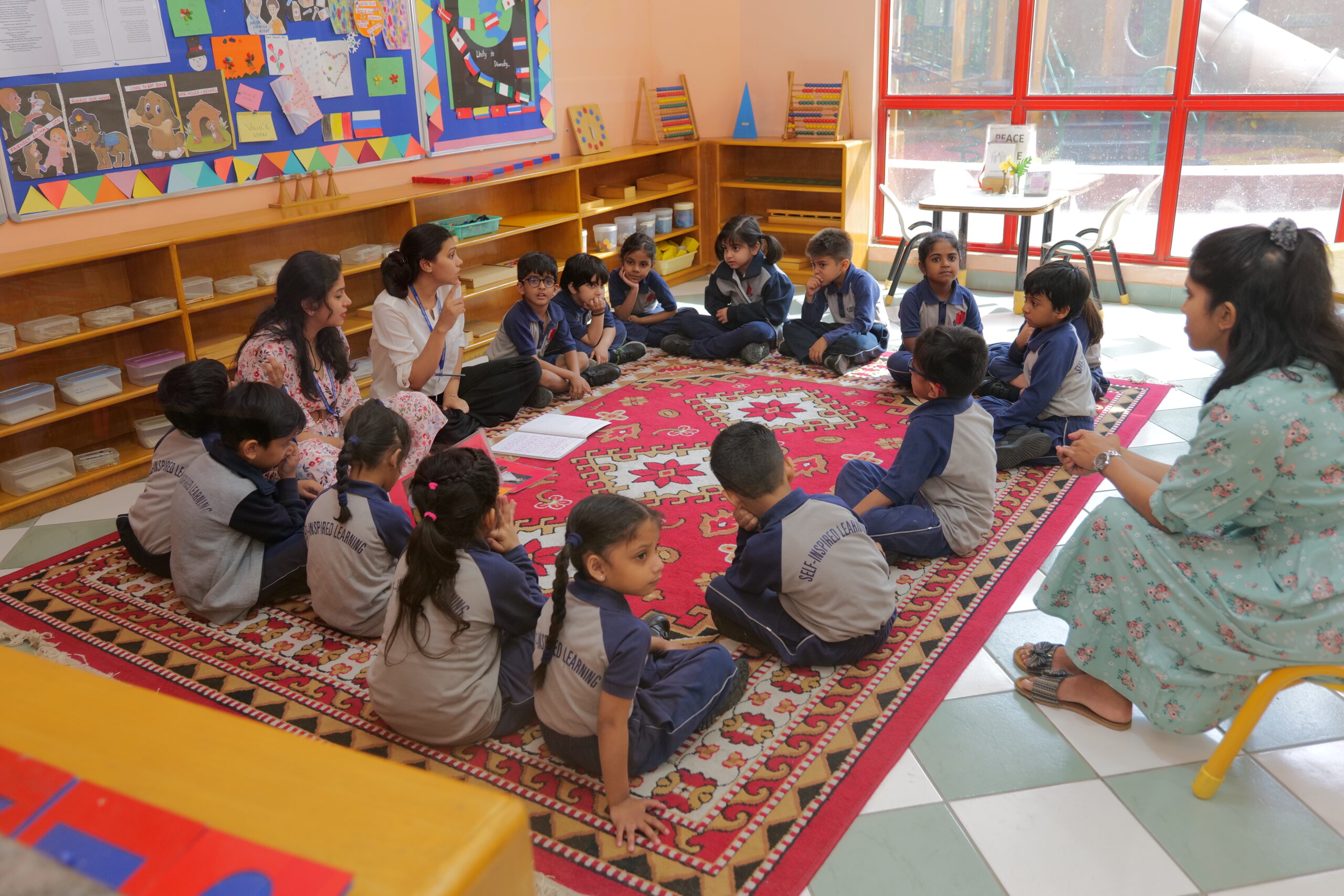
The journey begins with Cambridge Early Years, designed for children aged 3 to 6. At this stage, learning is play-based, experiential, and developmentally appropriate. The focus is on:
- Communication and language development
- Physical growth and coordination
- Social and emotional skills
- Early literacy and numeracy
Young learners are encouraged to ask questions, explore their surroundings, and express themselves creatively. This foundation cultivates confidence and curiosity—two essential traits for lifelong learning.
2. Cambridge Primary: Strengthening Core Skills
The Cambridge Primary stage (ages 5 to 11) introduces structured academic subjects while maintaining a strong focus on skill development. Core subjects include:
- English
- Mathematics
- Science
Students begin developing analytical thinking and problem-solving skills. Assessments at this stage are designed to monitor progress rather than create pressure. The emphasis remains on understanding concepts deeply rather than memorizing facts.
3. Cambridge Lower Secondary: Expanding Academic Horizons
Between ages 11 and 14, students transition into Cambridge Lower Secondary. At this stage, subject depth increases, and learners are introduced to a broader curriculum that may include:
- Humanities
- Global perspectives
- ICT
- Additional languages
4. Cambridge Upper Secondary: The IGCSE Advantage
The Cambridge Upper Secondary stage culminates in the globally recognized International General Certificate of Secondary Education (IGCSE), typically taken between ages 14 and 16.
The IGCSE is widely respected by universities and employers worldwide. It offers:
- A broad choice of subjects
- Flexible subject combinations
- Balanced theory and practical application
- Assessment through coursework and exams
5. Cambridge Advanced: Preparing for Global Universities
After IGCSE, students can pursue Cambridge International AS & A Levels. These qualifications are recognized by top universities around the world, including institutions in the UK, US, Canada, Australia, and beyond.
A Levels allow students to specialize in 3–4 subjects, offering in-depth knowledge and strong academic preparation. The flexibility of subject combinations empowers learners to tailor their academic journey toward medicine, engineering, business, law, or liberal arts.
Why the Cambridge Pathway Stands Out
When comparing global curricula, the Cambridge Pathway offers several distinctive advantages:
1. International Recognition
Cambridge qualifications are globally respected and accepted by leading universities worldwide.
2. Skill-Based Learning
The curriculum emphasizes communication, collaboration, creativity, and critical thinking.
3. Flexibility
Schools can adapt the framework to suit their educational philosophy while maintaining international standards.
4. Continuous Progression
Each stage prepares students for the next, ensuring academic continuity without abrupt transitions.
The Cambridge Experience in a Modern Learning Environment
At institutions delivering the Cambridge curriculum effectively, teaching goes beyond textbooks. Students engage in:
- Project-based learning
- Collaborative discussions
- Research-driven assignments
- Technology-integrated classrooms
The aim is to create confident learners who can thrive in multicultural and competitive environments.
Conclusion:
The Cambridge Pathway is more than a curriculum—it is a structured journey that empowers learners at every stage. From the curiosity-driven Early Years to the specialization of A Levels, students develop academic excellence alongside essential life skills. Choosing a Cambridge education means investing in a globally relevant, skill-oriented, and student-centric approach to learning.
FAQs:
1. What makes the Cambridge Pathway different from traditional curriculums?
It focuses on inquiry-based learning, conceptual clarity, and progressive skill development rather than rote memorization.
2. At what age can children begin the Cambridge curriculum?
Students can start from Early Years, where learning is play-based and designed to build strong academic foundations.
3. How does Cambridge Primary prepare students for IGCSE?
It gradually strengthens analytical thinking, problem-solving, and subject depth to ensure a smooth academic transition.
4. Is the IGCSE qualification globally recognized?
Yes, IGCSE is accepted by leading universities worldwide and valued for its academic rigor.
5. Does the Cambridge Pathway support holistic development?
Absolutely, it integrates academics with creativity, collaboration, and real-world application.
6. How does this pathway help in long-term academic success?
Each stage builds upon the previous one, ensuring continuous growth and readiness for advanced studies.