Key Highlights
- Focus on real-world skills beyond academic theory
- Emphasis on communication, collaboration, and critical thinking
- Integration of experiential learning and global exposure
- Development of emotional intelligence and leadership skills
- Preparation aligned with modern international education standards
Table of Contents
- Introduction
- About Us
- Why learning beyond textbooks matters
- Which real-world skills matter most?
- How experiential learning builds future readiness
- Role of international education in skill development
- Conclusion
- FAQs
Introduction:
Modern education is no longer limited to memorising facts or scoring high marks in exams. At Excelsior American School, the Top International School in Gurgaon where today’s world demands learners who can think independently, solve problems creatively, and adapt quickly to change. This shift has made “learning beyond textbooks” a central focus in international education systems worldwide.
In environments inspired by schools, students are encouraged to move beyond passive learning and actively engage with real-world experiences. This includes teamwork, leadership opportunities, digital literacy, and emotional intelligence development, all of which prepare students for life after school.
About Us
The learning approach discussed here reflects globally aligned educational practices where academics are integrated with life skills. Educators act as facilitators, guiding students through inquiry-based learning, collaborative projects, and hands-on experiences that build both knowledge and character.
Why does learning beyond textbooks matter in today’s world?
Traditional learning often focuses on theory, but real-life success depends on application. Students may know formulas and definitions, but without practical exposure, they may struggle in unfamiliar situations.
Modern education bridges this gap by encouraging:
- Problem-solving instead of rote memorisation
- Team-based projects instead of isolated study
- Communication exercises instead of silent learning
- Real-world simulations instead of only written exams
| Traditional Learning | Real-World Learning |
| Memorising answers | Applying knowledge |
| Individual study | Collaborative tasks |
| Fixed outcomes | Open-ended exploration |
| Exam-focused | Skill-focused |
Which real-world skills are essential for future readiness?
Real-world readiness is built through a combination of cognitive, social, and emotional skills. These skills ensure students are not only academically strong but also adaptable in dynamic environments.
- Critical thinking: Analysing situations and making informed decisions
- Communication skills: Expressing ideas clearly in writing and speech
- Collaboration: Working effectively in teams with diverse perspectives
- Digital literacy: Understanding tools, platforms, and responsible usage
- Creativity: Thinking beyond conventional solutions
- Emotional intelligence: Managing emotions and understanding others
These skills are gradually developed through structured activities, classroom discussions, group projects, and co-curricular engagement.
How does experiential learning build confidence and capability?
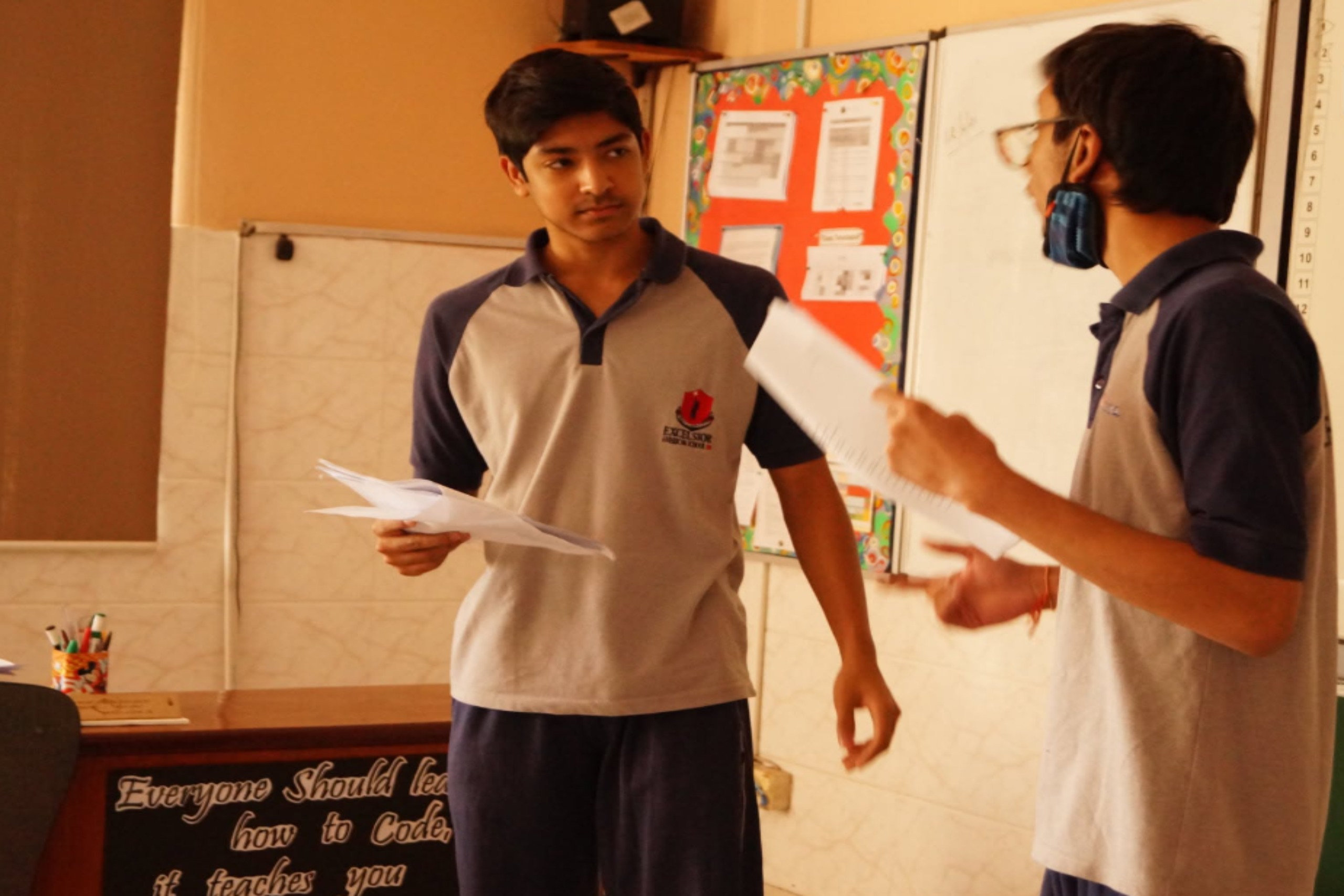
Experiential learning focuses on “learning by doing.” Instead of only reading about concepts, students actively participate in activities that simulate real-life challenges.
Examples include:
- Science experiments that connect theory to practice
- Model United Nations debates to build global awareness
- Entrepreneurship projects to understand business basics
- Field visits to industries and cultural institutions
This approach helps students:
- Retain knowledge longer through practical application
- Build confidence in public speaking and decision-making
- Learn from mistakes in a safe environment
- Develop leadership qualities early
What role does international education play in skill development?
International curricula are designed to prepare students for global opportunities. They combine academic excellence with holistic development, ensuring students are future-ready in every sense.
Key features include:
- Inquiry-based and project-based learning models
- Continuous assessment instead of only final exams
- Exposure to global perspectives and cultures
- Strong emphasis on arts, sports, and innovation
| Skill Area | Development Method | Outcome |
| Leadership | Group projects | Decision-making ability |
| Communication | Presentations | Confidence in expression |
| Creativity | Design thinking tasks | Innovation mindset |
| Collaboration | Team assignments | Social adaptability |
How do schools nurture life skills alongside academics?
Modern educational environments integrate life skills into daily learning rather than treating them as separate subjects.
- Morning circles to build emotional awareness
- Group discussions to improve articulation
- Role-play activities for empathy building
- Digital assignments for tech proficiency
- Sports and arts for discipline and creativity
Teachers play a key role by observing student behaviour, offering feedback, and encouraging reflective thinking. This ensures holistic growth rather than one-dimensional academic performance.
Conclusion:
Learning beyond textbooks is essential in shaping well-rounded individuals who are ready for real-world challenges. When students engage in experiential learning, develop soft skills, and explore creative thinking, they become adaptable, confident, and future-ready.
International education models reinforce this transformation by balancing academics with practical exposure, ensuring students are prepared not just for exams, but for life.
FAQs
Q. 1 How does Excelsior American School compare with other international schools in skill-based learning?
Ans : It follows a balanced approach, similar to top international institutions, focusing equally on academics and real-world skill development.
Q. 2 What makes international schools different from Excelsior American School in teaching methods?
Ans : While many institutions use experiential learning, differences may lie in curriculum depth, global exposure, and co-curricular integration.
Q. 3 How do Excelsior American School and other international schools develop communication skills?
Ans : Both encourage presentations, debates, and group discussions, though methods and frequency may vary.
Q. 4 Which is better for creativity development: Excelsior American School or other international schools?
Ans : Both offer strong creative programs, but exposure to arts, innovation labs, and projects can differ across institutions.
Q. 5 How do international schools and Excelsior American School prepare students for future careers?
Ans : They focus on internships, project-based learning, and leadership activities to build career readiness.
Q. 6 Do Excelsior American School and other international schools focus equally on academics and life skills?
Ans : Yes, both aim for holistic education, but implementation style and emphasis may differ slightly between schools.